
How My Swim Coaches Helped Me Become an Olympian

Screen-Shot-2014-11-12-at-11.11.43-PM.png

One of the reasons I loved swimming as a child was simply because I loved the swim coaches on my first summer team. During one particular afternoon practice, I vividly remember my first coach Sean had us all singing lyrics from a Jimmy Cliff song: “you can get it if you really want, but you must try, try and try, try and try, you’ll succeed at last” during a kicking set when it was chilly outside and most of us were in a bad mood since the water was so cold. He also sang “you’re my sunshine on a cloudy day“ to us when we didn’t want to get in the water. He was always smiling, optimistic, and playful. As an eight year old, everything was new, challenging, and exciting and I viewed my swim team as an extended family. My first coaches gave me a pure love for the sport of swimming, which opened up many doors.

Leaving my summer team to train on a year-round team was a hard decision to make at age 12. I loved my summer team and I knew I would miss the atmosphere of warm summer days spent wearing my speedo all day, hanging with my friends and goofing around with the coaching staff. But it was time for the next step and for new challenges. The transition was difficult, as we would train in the mornings before school and again after school during the winter months in an outdoor pool. It was the complete opposite of swimming in the hot afternoons in July. Swimming was no longer fun for me and I was constantly tired and always cold with wet hair. My new coaches were also difficult to adjust to, as they demanded more of me. I remember constantly getting into trouble. I was a young difficult teenager; rebellious and emotional. I would have long talks with my coach Ron about how I wanted to have a social life and how I felt like I was missing out. He was always talking to me about the bigger picture and my future, which I was unable to see at the time. I would talk back to him, challenge him, and fight with him often, yet it was through his high expectations that I grew as a young athlete. He gave me a set of lessons to build my future on; attention to detail, discipline, setting bigger goals, and developing an appreciation for my family and the strong community that we lived in. He also developed my stroke technique and my confidence in racing, which provided a solid foundation for the next level of competition that I would experience at UCLA.

I moved down to Los Angeles to study and train at UCLA, which inevitably came with a higher level of expectation. I was intimidated by the workload and was fearful I wouldn’t survive all four years training at that level while also managing my schoolwork and travel demands. Again, I was lucky to have two coaches to help guide me during those years of doubt and struggle. My coaches Greg and Cyndi gave me the faith that I needed to push past my comfort levels. After one particularly hard week, I remember calling my coach Greg crying because I was so overwhelmed with the demands of Division-1 swimming, schoolwork, and all the social distractions that came with university life. His ability to calmly listen, understand, and support me during this transition was one reason I kept going—even though I was doubting myself and my abilities. I remember he would say, “find a way” when I would be swimming slow. He set the bar higher than I set for myself and eventually, I rose up to it.

My head coach Cyndi was my source of strength that propelled me to competing at the Olympic Games. I had doubted my abilities for years, thinking I wasn’t good enough to race at that elite level. I was only 18 when I began swimming with her and was more than a handful for the first few years. She demanded the best out of us, and if I wasn’t giving 100% in workout, she would kick me out of the pool. Cyndi allowed me to make mistakes, but there were definitely consequences for my occasionally reckless behavior. There were times when I missed morning workouts because I was out  late with my friends, and once I was suspended for a week. She helped me take ownership for my actions and she taught me not to compare myself to others, which was something I had always done. She encouraged me to set personal and athletic goals, to work with UCLA’s sports psychologist and nutritionist. Cyndi gave me the opportunity to explore elements of training that I had never thought of.  She believed in my potential and nourished my self-confidence with her ability to see me as more than just a talented athlete. She was there for me outside of the pool when I was having difficulty with my parent’s divorce and breakups with boyfriends. I trusted her like family and was able to open up to her about problems in my life that would inevitably affect my performance in the water. Her strength of character gave me the courage to eventually qualify for the Olympic team and compete at the highest level of swimming.

Each of my former coaches has deeply impacted my life. There is no doubt in my mind that without all the lessons my coaches instilled in me throughout the years, I would have never become an Olympian. The power that coaches posses to positively impact and empower the lives of others is unmatched and is a such a rare gift. I was beyond blessed to have had a handful of coaches who gave me the courage and confidence to pursue my dreams and to appreciate all the opportunity in sports. Although he was never my personal coach, every UCLA Bruin learned from the great John Wooden and one of his quotes still inspires me to this day: “success is never final, failure is never fatal, it’s courage that counts.”
“I Do” vs. “I Can”: Marriage Equality and Youth Sports

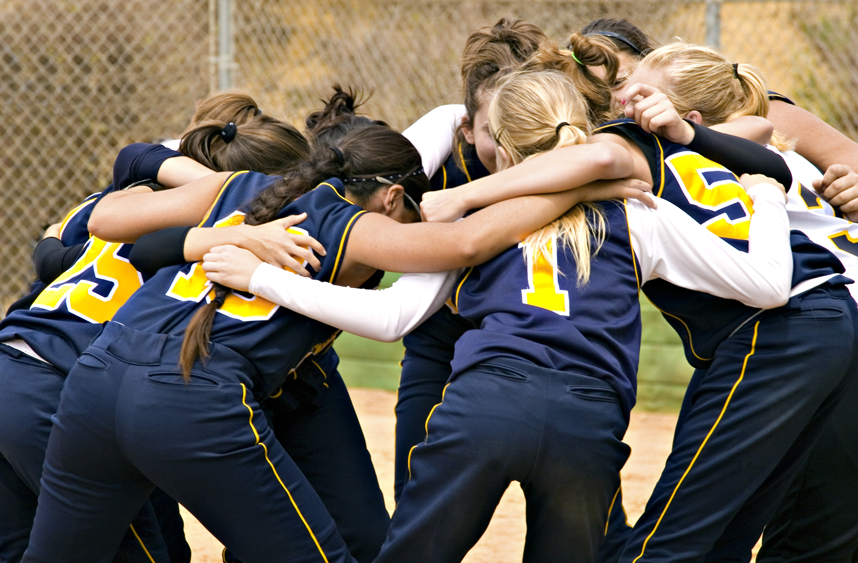
softball-huddle.blog_.png

This summer, Americans witnessed the highest court of the land deliver a message to LGBTQ youth that one day they too, can say “I do.” But little more than a month prior to the ruling, a rather startling survey revealed that many LGBTQ youth continued to suffer from widespread prejudice in sports settings across the nation. The levels of homophobia and discrimination in youth sports, in which the U.S. ranked worst of the six countries surveyed, suggest that the legal victory of “I do,” while important, may have little bearing on the persistent social challenges faced by LGBTQ youth in saying “I can.” By “I can,” I mean “I can play baseball.” “I can play basketball.” “I can play football.” The study looked at 9,500 LGBTQ people in 6 countries and found that 84% of gay males and 82% of lesbians were subject to verbal slurs like ‘faggot’ and ‘dyke’ while participating in sports. Half of gay men and nearly a third of lesbians hid their sexuality from their teammates for fear of rejection, and only 1% of those surveyed felt that gays and lesbians were completely accepted in youth sports.

Invariably, in every one of the situations in which discrimination occurred, there was an adult, also known as the coach, who either paid no attention or tacitly allowed these homophobic slurs to slip under their radar without intervening. The effects of these coaches’ ignorance are not just that the vast majority of LGBTQ drop out of sports because they do not feel welcomed, but also that the coach establishes a norm in which the wider umbrella of prejudice and bullying becomes acceptable to all youth, gay or straight. This is neither good for sports nor good for this nation.

Sports programs must be inclusive of all youth, and coaches must be trained to value and promote diversity and inclusion. We simply cannot afford to have any child drop out of sports based on prejudice. It is anathema to what sports represent to our society as a way to bring people together. It is also damaging to the overall process of child development. The evidence that participation in sports creates healthier and more engaged citizens is overwhelming. Boys who play sports are much less likely to drop out of school and much more likely to avoid making bad choices like joining a gang. Girls who play sports are more likely to have confidence and self-esteem, graduate from school, and avoid teenage pregnancy. The regular physical activity that comes from sports is now being linked to stress reduction, cognitive skill building and crucial brain development that contribute to children’s grit and self-worth. The case for youth sports is clear:  youth sports are critical to child development. For LGBTQ youth who experience higher rates of depression and suicide, these benefits may literally save lives.

It is critical that schools, parks and other publicly financed institutions require coaches to be certified in sports-based youth development (SBYD).   SBYD incorporates the best practices in positive youth development into coaching so that coaches know how to address issues like bullying, racism, homophobia and sexual harassment among their teams.

The results of this recent study remind me of an SBYD training conducted by Up2Us Sports in Los Angeles that involved more than 100 coaches, many of them from urban minority communities. The training provided coaches with resources and methodologies for designing practices that engage all youth; promote social interaction across race, gender, and sexual orientation; address issues of trauma; inspire health and wellness; and maximize the sports experience as one of growth, learning and fun. Upon the completion of the training, one of the coaches stood up and shared his story of being a gay man in an inner-city community in which his family, his church, and his sports team disowned him. He described a journey of feeling so isolated that he nearly dropped out of school and got involved in violence and other negative behaviors just to cover up his identity and his lack of acceptance. He concluded that it was his love of sports that eventually motivated him to turn his life around and become a coach. While he stated that he did not intend to “come out” at the training, the training enabled him to understand that his plight was shared by millions of children in this country whose silence in sports was reinforced by coaches who were never trained to speak out about prejudice and bullying. He said that only now did he realize the influence that a coach could have in making a child believe that he belonged.

It's important now more than ever that we train our coaches to step up to the plate and be the role models that their positions require. This is not a gay issue, it’s a youth development issue. Sport is the level playing field that has historically been the platform for ending prejudice and discrimination. It is important that one day when LGBTQ youth say “I do,” it's because they grew up just like any other youth who said  “I can.”

“I can play basketball.”

“I can play soccer.”

“I can play sports.”


-

In 2013, Up2Us Sports and the Ben Cohen StandUP Foundation partnered to increase awareness of bullying in youth sports by creating an anti-bullying curriculum and toolkit for programs and coaches. The toolkit is built to ensure that all coaches have the awareness, knowledge, and strategies to make safe sports environments a reality. Click here learn more about the training and to access the toolkit.
 
softball-huddle.blog

Ambassador Claressa Shields Shares Documentary with Flint Youth

Claress-Blog.feature.png

Claressa-BlogUp2Us Sports ambassador, Claressa Shields returned to her home town of Flint, Michigan to inspire youth with T-Rex, the award-winning documentary about her road to becoming the first woman to win an olympic gold medal in boxing in the 2012 olympics. In the documentary, the filmmakers show how Claressa was able to overcome her difficult upbringing through her love of boxing and the help of her coach.  Claressa met with 130 youth after the screening to answer questions and sign autographs.  In addition to the youth screening with member organization Crim Fitness, a public screening was held in the evening with over 300 attendees, including the Mayor of Flint.

Measuring Healthy Choice Behavior in At-Risk Youth

1st-base-coach-player.blog_.png

By School-to-School International

Up2Us Sports is encouraging undeserved youth in cities across America to make positive life choices through its Sports-Based Youth Development Program. Up2Us Sports harnesses the power of sports to ultimately reduce youth violence, promote health, and inspire academic success. School-to-School International had the opportunity to collaborate with the New York-based organization to help measure the extent to which their programming is instilling healthy choice attributes in participants.

Research has shown a correlation between certain attributes in young people and the types of life choices they make. In fact, eight “High Impact Attributes” have been isolated as key predictors of future healthy decision-making in youth: Self-Awareness, Positive Identity, Situational Awareness, Plan B Thinking, Future Focus, Discipline, Social Confidence, and Prosocial Connections. Up2Us Sports uses these eight High Impact Attributes as a scale to measure the success of its Coach Across America program.

STS assisted Up2Us Sports in producing annual surveys to study changes in youth before and after participating in Coach Across America programs. Tools for surveying youth in two different age groups were piloted. STS used widely accepted techniques of quantitative statistical analysis to analyze the pilot test results and ensure the survey design would produce reliable results. In addition to the eight High Impact Attributes, STS recommended the inclusion of a Global Well-Being1 scale, an overall predictor of social and emotional health.

We hope this work will help Up2Us Sports in establishing accurate linkages between their Sports-Based Youth Development Programs and healthy decision-making attributes in youth participants.

  1. The items used in this survey are based on the well-being scale in Gallup’s publicly available survey items.
Up2Us Sports partnered with School-to-School International to increase the effectiveness of its evaluation of the Coach Across America program. The blog was originally published here on the STS blog.

1st-base-coach-player.blog

Miami Marlins Honor Up2Us Sports as 2015 Charity Partner

IMG_5727.jpg
On Friday, July 31st, the Miami Marlins honored Up2Us Sports as a 2015 Charity Partner.  The Miami Marlins have funded Up2Us Sports’ work in the Miami area and provided SBYD training for all baseball coaches in MLB's Reviving Baseball in Inner Cities (RBI) program. 

In celebration of this partnership, Up2Us Sports coaches, board members, donors and staff attended and participated in the game to spread the word about sports-based youth development. Up2Us Sports donor Robin Green threw the first pitch of the game, followed by Leonel “Macho” Garcia giving the Play Ball announcement. Garcia was accompanied by his coach, Kleiton Almeida, Up2Us Sports’ 2015 Coach of the Year. 

An additional $6,000 was raised to support Up2Us Sports through ticket proceeds, 50/50 raffle and a silent auction. We look forward to continuing our work in Miami with the Marlins. 

IMG_5795


IMG_5734


IMG_5758


IMG_5814

Worldwide Day of Play Hosted by Up2Us Sports, Nickelodeon, and Mayor of Miami Gardens

blog.feature.IMG_5543.png

Up2Us Sports was proud to partner with Nickelodeon and the City of Miami Gardens to host a Worldwide Day of Play to kickoff Mayor Oliver Gilbert’s citywide fitness challenge.  Nearly 2,000 kids from summer camps across Miami-Dade and Broward County got a chance to participate in active play with Coach Across America coaches and Nickelodeon stars from Every Witch Way. Coach Across America coaches from the Miami area had kids running around, playing 4-square and tossing water balloons to stay cool.  A mix of experienced and new coaches were leading games and using coaching techniques they learned at the National Coach Training Institute.

Up2Us Sports also received a generous donation of $10,000 from Nickelodeon to continue to improve the Miami area through sports.

blog.IMG_5687

blog.IMG_5516

blog.IMG_5537


blog.IMG_5530


blog.IMG_5564


Paralympian Matt Scott Inspires Brooklyn Youth

matt-scott-social.png

Three-time Paralympic wheelchair basketball player Matt Scott has travelled the world playing the sport he loves and on July 24th it took him deep into the heart of one Brooklyn’s most under-served communities: East New York. In the utility room of the Nelson Mandela Community Center, Up2Us Sports member organization Street Soccer USA gathered 50 of their summer camp children to hear Scott share his inspiring story about how sports have made a powerful impact in his life.  Born with Spina Bifida, Scott has spent his entire life in a wheelchair. But he didn’t let it stop him from playing a game he fell in love with at a young age. He answered questions from the group of 7 and 8 year olds that ranged from how he goes to bed at night to who his favorite basketball player is. He surprised all of them when he was handed a basketball and showed off his expert ball handling skills.  Matt showed these Brooklyn youth how sport allowed him to turn his disability into an opportunity - and an Olympic medal!

Matt has represented the United States in international wheelchair basketball for over a decade, including at the 2004, 2008 and 2012 Paralympic Games. Team USA opens play against Colombia at the 2015 Parapan Am Games in Toronto on August 8th, in preparation for the 2016 Rio Paralympics.

IMG_5167

IMG_5239 IMG_5220


IMG_5190

Baseball’s All-Star: How Major League Baseball is Investing in Youth Sports

softball-catcher.jpg

Megan BartlettChief Program Officer Up2Us Sports - When you live in Boston, there are a few constants of summer that are hard to imagine ever changing: weekends on Cape Cod, lobster rolls, complaining about the humidity and the Red Sox. In fact, just this weekend with the Yankees in town, all eyes were turned to Fenway, despite the fact that the Red Sox are having what might be called a less than stellar first half of the season. As a baseball fan, I can’t imagine a summer without the Red Sox. But as an advocate for youth sports, I know that my summer staple might soon disappear.

According to Major League Baseball (MLB), participation in youth baseball is on the decline, falling more than 7% between 2011-2012. In particular, kids in underserved urban communities are staying away. Fewer kids playing means fewer future professional baseball players and fewer future fans.

The good news is that MLB is taking this situation seriously.

One of the first things that Commissioner Manfred did upon taking office was launch One Baseball, an initiative aimed at getting more players into two baseball pipelines: one that leads to better baseball players and one that leads to lifelong fandom.What’s great about both of these outcomes is that to get there, we have to start with kids who love baseball. And getting kids to love their sport, and learn important lessons from that sport, is what Up2Us Sports is all about. That’s why we’ve partnered with MLB’s Revitalizing Baseball in the Inner-City (RBI) initiative- to get more kids to play, love and learn from baseball and softball.

baseball-hit.lowresFirst, Up2Us Sports is placing trained, paid coaches through Coach Across America in RBI programs around the country. These coaches help RBI programs reach out to new kids, support the training of existing volunteer coaches, and are setting the tone for a new way to teach baseball - one that focuses on having fun, developing baseball and life skills, and building relationships that will keep kids coming back year after year.

Second, Up2Us Sports offered a series of workshops to league administrators on creative strategies for changing the game of baseball to appeal to and retain more young people. Co-facilitated by Edgework Consulting and Boston University’s Institute for Athletic Coach Educations, the workshops leveraged the creative power of more than 200 RBI league administrators to make baseball more appealing and fun. This means leveraging the opportunity to develop efficacy through skill-building, and changing the rules to make the game more active and engaging for every player (including the ones in right field who might not otherwise get a lot of action). For more on the workshop, check out this blog.

Third, Up2Us Sports is working directly with teams around the country to put a stake in the ground that says that youth baseball coaches can and should be the best of the best when it comes to developing players and people. With the Miami Marlins, we’ve partnered on a city-wide initiative to offer a sports-based youth development certification to youth sports coaches in Miami and Miami Gardens. The Washington Nationals Urban Youth Academy has been host to Coach Across America coaches for years, making a commitment to quality coaches in their programs. Additionally, we’ve helped the City of Chicago’s Park and Recreation system evaluate and improve their summer baseball and softball leagues.

Raising the quality of coaches in the RBI programs will go a long way towards developing the quality of baseball players and the pool of lifelong fans. Kids who have a good experience playing baseball or softball will want to keep playing. Kids who keep playing will get better at the sport and grow to love it even more. Well-trained coaches create the environment in which this growth and love for the game can happen. By investing in coach-mentors, RBI is taking a huge step towards making sure that baseball remains a fixture of summer. Now, if only it weren’t so humid.

Up2Us Sports Annual Report

annual-report-blog-cover.jpg

For the last five years, we have been hard at work using sports to improve the lives of at-risk youth across the country.  Take a look at our first ever annual report, documenting the impact we made in the 2013-2014 program year. We look forward to continuing to promote sports as the best vehicle for change in our underserved communities! Email info@up2ussports.org with any questions.

annual report blog cover

Why Pope Francis Should Join My Board of Directors

Baseball-Coach.lowres.jpg

Paul CaccamoFounder & CEO Up2Us Sports -

Youth sports are in desperate need of reform. Less and less kids are playing sports in America and kids from disadvantaged economic backgrounds are seeing their sports programs cut entirely. This is not just an issue of the decline of one our great pastimes, it is the loss of one of most effective tools for developing essential life skills in young people in this country.

I have spent my life not only calling for reform, but also implementing tools to carry out this reform. I launched Up2Us Sports in 2010 to train coaches on how to use sports to inspire success among youth. This means teaching coaches how they can impact health, violence and academic success using just a golf club or a tennis racket, a hockey stick or a soccer ball. In the poorest neighborhoods in this country, I also hire and train local adults as coaches to use sports to address issues of poverty. After all, kids who play sports are more likely to perform better in school and succeed in the future workplace. A recent evaluation of Up2Us Sports shows that the dollars invested in training coaches potentially saves society millions of dollars in costs associated with treating chronic diseases and/or incarcerating our youth. Both issues are preventable when youth have teams to belong to that inspire exercise and discipline.

Having spent my career in sports-based youth development, the most difficult part of my job is convincing donors that funding sports is not frivolous. It is a solution to violence prevention, health education and academic outcomes. But with a board member like the Pope, my job might just be easier.

If you haven't heard, the Pope recently gave a speech to the Pontifical Council for the Laity calling for reform in youth sports. He said that overemphasis on competitive sports have derailed the potential of sports to help lift children out of poverty. He said that training coaches is key to helping sports achieve its potential for all youth, but particularly those youth in disadvantaged communities. And he urged adults to reform youth sports so that it can be the solution that Up2us Sports envisions it to be. Okay, he didn't say "Up2Us Sports" by name but I'm sure if he knew about us he would have. And I'm sure if he read my recommendations for advancing the sports-based youth development movement, he might have included them in his pontifical lecture as well.

So Pope Francis, please consider this a standing invitation to be my Board Member. I'll schedule our first meeting during your trip to America. I'll have 3,000 trained Up2Us Sports coaches there to greet you to show that the reform you call for is underway.

And, I'll start the meeting with a prayer: that more people heed the cry for reform before more kids lose this invaluable platform to develop into healthy and contributing adults.

Baseball-Coach.lowres


Title IX: It’s More Than a Law, It’s a Culture

Metro-Lax-girls-team.blog_.png

Susan GolbeSenior Manager, Monitoring & Evaluation Up2Us Sports

On the 43rd anniversary of Title IX, it’s an apt time to think about how far female athletic participation has come and what remains to be accomplished.  At Up2Us Sports, we know the work is not done. In some communities Title IX has been so effective it has become nearly invisible, yet for other communities, inequality persists.  Most notably, there are fewer sports opportunities for youth attending schools with a majority non-White population. Girls who attend these schools have the fewest opportunities to participate in sports[i].  We also know female athletes still receive drastically less media coverage than male athletes[ii].  Did you know the FIFA Women’s World Cup is going on right now in Canada? I’m a fan and I can barely find any coverage!

Super-G.blog

Even though I’ve only lived in a world with Title IX, I know it takes more than a law to feel like I can walk onto a sports field and play with the boys; it takes a positive and inclusive culture in which female athletes feel commonplace and respected.  As a recreational adult athlete, I have heard some archaic things. I have been told that I should sub out more so men can play more minutes or conversely, that I was good enough to “sub in like I was a guy.” I have been made to feel as if I am only permitted to play one of three positions acceptable for women and that I must continually earn my spot while men are under no such pressure.

Title IX’s continued importance cannot be blurred.  Up2Us Sports is doing its part on two crucial fronts: externally and internally.  Externally, our signature program Coach Across America boasts a 45% female coach force that is serving in the same communities as the schools with inequitable sports opportunities for boys and girls of color.  These coaches provide girls the inspiration and safety they need to participate.  Female coaches are integral components of the cultural change necessary to promote female athletic participation. Every day even when the media or others don’t show it, these coaches show young girls that women can play sports, and coach them too.

Internally, Up2Us Sports’ staff culture is actively supportive of female athletic participation.  We recently dedicated an entire staff meeting to Title IX and the barriers girls face when accessing sports programs; our March Madness brackets are for both men’s and women’s tournaments; at our Coach Training Institutes a role specifically designed for endurance and speed was assigned to me with no hesitation based on my gender; we have an annual wiffleball game at our staff retreat in which equal numbers of men and women play without attention to “appropriate” positions or gender-balanced teams; we have female staff members who coach lacrosse, volleyball, basketball, and softball, and their supervisors provide them with the flexibility they need in their work schedules so they can coach during the day. When Up2Us Sports says we care about female athletes, we mean it: We’re paying them to work in the communities that need them most and we’re creating an internally supportive culture that is determined to create lasting change.


[i] http://www.nwlc.org/sites/default/files/pdfs/fin

[ii] LaVoi, 2012.

The Winning Team: Meet Coach Christian

Coach-Christian.Soccer.jpg

For some kids, having a parent as a coach turns them away from sports. This was not the case for Christian Gutierrez, a Coach Across America coach with Woodcraft Rangers in Los Angeles. Growing up with his father as his soccer coach, Christian was able to see the positive impact his father’s coaching had not only on his life, but the lives of his teammates. This was the impetus behind Christian’s desire to become a coach himself.

Since starting as a soccer and basketball coach at Granada Middle School in his hometown of Whittier last August, Christian has flourished as a coach. In addition to teaching the kids sport-specific skills, he has become more effective in his ability to teach leadership and life skills. A fourth-grader named Jacob that Christian knew from a summer program at Woodcraft Rangers has shown impressive growth. Naturally athletic, Jacob lacked confidence in himself and in his soccer skills. Christian was able to incorporate lessons he learned from an Up2Us Sports National Coach Training Institute to help Jacob transform into a leader on the team.Through structured informal time and daily check-ins, Christian was able to get to know a lot more about Jacob, such as where he’s from and what some of his struggles are. “Talking to them when you have the opportunity really, really shows them a lot and it shows that you’re making an effort to listen to them and hear what they have to say.” Jacob grew to trust Christian and, in turn, grew the confidence to trust in his own leadership and soccer skills.

Other than following in his father’s influential footsteps, Christian’s favorite part about being a coach is seeing the kids use the skills he’s taught them. “When you teach them something at practice and then see them use that skill in a scrimmage or a game that really, really makes me feel good.” He doesn’t mean just sport skills either. He has a rule with the team - Encourage, Don’t Discourage. “When someone falls and the others don’t laugh at them and instead help them up, or if someone isn’t getting a drill and they help them throughout the drill...that really makes me happy.”

Aside from coaching, Christian attends college full time and is currently applying to work for the Los Angeles Police Department. A criminal justice major, he has already passed the physical abilities test and oral interviews. He wants to help affect change in the lives of inner city youth and sees a large connection between his passion to coach and his goal to become a police officer.

“I want to be a coach and police officer so that way I am helping my community while I am serving it.”

Coach Christian.Soccer